By a vote of 204-215, the House rejected H.AMDT.344 from Reps. James McGovern (D-Mass.) and Justin Amash (R-Mich.) that would have required the Department of Defense to develop a plan for an “accelerated transition of military operations to Afghan authorities.” The final roll call on the vote shows that all but 8 Republicans voted against the accelerated transition and all but 8 Democrats supported it. The amendment to H.R. 1540 (National Defense Authorization Act for Fiscal Year 2012) proposed a plan to speed up the withdrawal and was not an immediate requirement to withdraw forces.
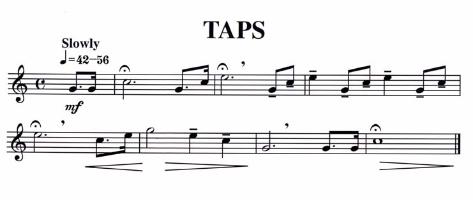
As we near Memorial Day, the number of U.S. troop deaths in the Afghanistan War now exceeds 1,500. This video from Rethink Afghanistan says this should be the last Memorial Day when we put military families through this kind of agony. Bring the troops home.
Sunday, May 29, 2011
Friday, May 27, 2011
Big Rats and Free Speech

In New York City, inflatable rat balloons are commonplace signs of labor disputes where unions picket work sites using non-union workers. Whether the rat balloon is a form of picketing that is illegal under Section 8(b)(4)(ii)(B) of the National Labor Relations Act has been unclear. That provision makes it illegal for anyone to threaten, coerce, or restrain any person engaged in commerce or in an industry affecting commerce. A new NLRB ruling in Sheet Metal Workers International Association, Local 15, AFL–CIO and Galencare, Inc., d/b/a Brandon Regional Medical Center and Energy Air, Inc. states that the display of an inflatable rat does not violate Section 8(b)(4)(ii)(B).
The case began in 2003, when union members mounted an inflated rat balloon on a flatbed trailer and positioned the trailer on public property in front of the hospital worksite where the employer hired Workers Temporary Staffing (WTS), a labor supply company, to provide employees for the project. The rat balloon measured about 16-feet tall and 12-feet wide, and had a sign captioned “WTS” attached to the rat’s abdomen. In 2006, the Board issued a decision ruling that a mock funeral staged by the union in front of the hospital was unlawfully coercive. Now, the Board has ruled on the display of the inflatable rat balloon.
The Board relied on First Amendment principles in its ruling citing the US Supreme Court’s decision in Snyder v. Phelps, 562 U.S.__ (March 2, 2011), which affirmed First Amendment protection of picketing by church members of a military funeral, adjacent to a public street, with placards communicating the members’ belief that God hates the United States for its tolerance of homosexuality.Two years ago, the New Jersey Supreme Court in State v. DeAngelo, 197 N.J. 478 (2009), struck down a municipal ordinance which banned the use of inflatable balloons, as well as banners and streamers, except in connection with grand openings. The court said the ban was not “content-neutral” since it allowed balloons to be used in one circumstance, grand openings, while prohibiting them in others, including union-related disputes.
The Brooklyn Law School Library maintains a series of research guides one of which by Librarian Jean Davis, the Administrative Law Research Guide, notes that behind the BLS firewall, researchers can access components of the CCH Internet Research Network for the NLRB Case Handling Manual. A record for the Manual is included in the library’s catalog SARA which links to the Westlaw Database Identifier CCH-NLRBCHM.
The Board relied on First Amendment principles in its ruling citing the US Supreme Court’s decision in Snyder v. Phelps, 562 U.S.__ (March 2, 2011), which affirmed First Amendment protection of picketing by church members of a military funeral, adjacent to a public street, with placards communicating the members’ belief that God hates the United States for its tolerance of homosexuality.Two years ago, the New Jersey Supreme Court in State v. DeAngelo, 197 N.J. 478 (2009), struck down a municipal ordinance which banned the use of inflatable balloons, as well as banners and streamers, except in connection with grand openings. The court said the ban was not “content-neutral” since it allowed balloons to be used in one circumstance, grand openings, while prohibiting them in others, including union-related disputes.
The Brooklyn Law School Library maintains a series of research guides one of which by Librarian Jean Davis, the Administrative Law Research Guide, notes that behind the BLS firewall, researchers can access components of the CCH Internet Research Network for the NLRB Case Handling Manual. A record for the Manual is included in the library’s catalog SARA which links to the Westlaw Database Identifier CCH-NLRBCHM.
Tuesday, May 24, 2011
Brooklyn Bridge Opens May 24, 1863

A Brooklyn Eagle article called On This Day in History: May 24 The Brooklyn Bridge Opens notes the anniversary of the iconic landmark. The history of the bridge’s construction is told in The Great Bridge: The Epic Story of the Building of the Brooklyn Bridge by David G McCullough (Call #KFX2071 .M138) located in the Brooklyn Law School Library’s NY Collection. Aside from telling the history of the bridge and its builders, McCullough has written about what New Yorkers were thinking at a time when the era of skyscrapers was decades away. With the rapid growth in population after the Civil War, Manhattan was choked with lowrise tenements, warehouses and factories. The need for a reliable means to get to the vast open spaces of Brooklyn was urgent. It was not the horizontal which amazed witnesses to the constructionof the bridge but rather the height of the towers and roadway over the East River.
McCullough relates that “A bridge over the East River, joining the cities of New York and Brooklyn, had been talked about for nearly as long as anyone could recall . . . the idea for the bridge was exactly as old as the century, the first serious proposal having been recorded in Brooklyn in 1800.” He goes on to say that “Most appealing of all for the Brooklyn people who went to New York to earn a living every day was the prospect of a safe, reliable alternative to the East River ferries.” It is hard to imagine life in New York City without the Brooklyn Bridge.
The great poet, Walt Whitman, who lived and worked in Brooklyn part of his life and had a lifelong interest in the independent city of Brooklyn, described in his poem Crossing Brooklyn Ferry what it must have been like before the building of the bridge.
Sadly, today corrugated metal walls blockthe magnificent vistas from the Brooklyn Bridge. Installed as part of a $508 million rehabilitation project designed to double the capacity of two ramps and to replace rotting pavement, they will remain until 2014. The NYC DOT website says that the project is partially funded by the American Recovery and Reinvestment Act.
McCullough relates that “A bridge over the East River, joining the cities of New York and Brooklyn, had been talked about for nearly as long as anyone could recall . . . the idea for the bridge was exactly as old as the century, the first serious proposal having been recorded in Brooklyn in 1800.” He goes on to say that “Most appealing of all for the Brooklyn people who went to New York to earn a living every day was the prospect of a safe, reliable alternative to the East River ferries.” It is hard to imagine life in New York City without the Brooklyn Bridge.
The great poet, Walt Whitman, who lived and worked in Brooklyn part of his life and had a lifelong interest in the independent city of Brooklyn, described in his poem Crossing Brooklyn Ferry what it must have been like before the building of the bridge.
Crowds of men and women attired in the usual costumes! how curious you are to me!
On the ferry-boats, the hundreds and hundreds that cross, returning home, are more curious to me than you suppose;
And you that shall cross from shore to shore years hence, are more to me, and more in my meditations, than you might suppose.
On the subject of Whitman, a recent post on Due Process: the Georgetown Law Library Blog states that he “worked as a clerk in the Attorney General’s office from 1865-1873. The National Archives announced that it has recently discovered 3,000 documents relating to Whitman’s work in Washington, DC. The documents were found by Kenneth M. Price, a professor of English and co-director of the Walt Whitman Archives. The find illuminates not only this moment in American history, but what might have shaped the thoughts of Walt Whitman as well.”
Sadly, today corrugated metal walls blockthe magnificent vistas from the Brooklyn Bridge. Installed as part of a $508 million rehabilitation project designed to double the capacity of two ramps and to replace rotting pavement, they will remain until 2014. The NYC DOT website says that the project is partially funded by the American Recovery and Reinvestment Act.Monday, May 23, 2011
BLS Alumni in the News
This week's NY Times had stories about several noted Brooklyn Law School graduates. The Music section had an article about Bruce Ricker, Class of 1970, who went on to become a filmmaker. Ricker’s first feature-length film was, “The Last of the Blue Devils,” a portrait of Kansas City’s old-time jazzmen released in 1979. He also produced several made for television documentaries, including “Tony Bennett: The Music Never Ends” (2007), “Johnny Mercer: The Dream’s on Me” (2009) and “Dave Brubeck: In His Own Sweet Way” (2010). Ricker died on May 13 in Cambridge at the age of 68.
A second article, The Right Job? It’s Much Like the Right Spouse, is an interview with Barry Salzberg, Class of 1977, and chief executive of Deloitte LLP. Recollecting an early lesson about retrieving a case from the library in his first job, he goes on to discuss leadership and management style and other lessons he learned since graduating law school. His comments on what he looks for in hiring new associates are worthwhile reading for law students who want to improve their interviewing skills.
The third article is Guard Dog to the Stars (Legally Speaking) highlighting Martin D. Singer, Class of 1977. His firm, Lavely & Singer, has built a niche practice — shielding stars and their adjuncts from annoyance — into a Hollywood mainstay. Singer's firm, which does no criminal legal work, has become the legal protector of celebrity superstars like Charlie Sheen, Arnold Schwartzengger, Quentin Tarantino and Sylvester Stallone. Representation often involves the suppression of possible defamation of clients and disputes over commissions between them and their managers.
A second article, The Right Job? It’s Much Like the Right Spouse, is an interview with Barry Salzberg, Class of 1977, and chief executive of Deloitte LLP. Recollecting an early lesson about retrieving a case from the library in his first job, he goes on to discuss leadership and management style and other lessons he learned since graduating law school. His comments on what he looks for in hiring new associates are worthwhile reading for law students who want to improve their interviewing skills.
The third article is Guard Dog to the Stars (Legally Speaking) highlighting Martin D. Singer, Class of 1977. His firm, Lavely & Singer, has built a niche practice — shielding stars and their adjuncts from annoyance — into a Hollywood mainstay. Singer's firm, which does no criminal legal work, has become the legal protector of celebrity superstars like Charlie Sheen, Arnold Schwartzengger, Quentin Tarantino and Sylvester Stallone. Representation often involves the suppression of possible defamation of clients and disputes over commissions between them and their managers.
Thursday, May 19, 2011
Justis and JustCite
Brooklyn Law School students doing research in UK or EU law can access Justis and JustCite on the BLS Library A-Z list. Justis is a full-text online legal library of UK, Irish and EU case law dating back to 1163 and legislation from 1235. BLS access to Justis for cases is to the Law Reports (1865-) and Weekly Law Reports (1953-) and to statutes (1235-), statutory instruments (1949-) and earlier regulations (1671-) in original form. For more detail on coverage, see Jean Davis' English Legal Sources Available through BLS Library.
Features on the latest version of Justis include:
•All UK legislation including repealed acts and measures
•Quick searches for faster retrieval of vital information
•Partial reference and simple keyword searching
The companion site, JustCite, is a legal search engine and citator that links to content from a range of publishers with links to full-text material on leading online services. It cross references cases, legislation and articles covering all major law series in the UK and links to all major legal databases including Westlaw, Lexis Library, Justis, for which the Brooklyn Law School Library has a subscription. One search will find the cases, legislation and articles for the researcher; see whether it is still good law; and then link through to that item by choosing one of the databases to which the BLS Library subscribes and it has:
•Indexing of over 425,000 cases, including transcripts and unreported judgments
•Details whether a case is still good law, allowing for fast decisions on the value of a precedent
•Cross-links between cases, legislation and journal articles
•Full legislation amendment trails
The new interface allows the user to see the relationship between documents easily and gives snapshots of the status of a case as shown in this image of the JustCite Precedent Map. The first view of the map displays the case in the center of the screen with cases around with which it has a relationship.

Cases cited by the case the researcher entered appear on the left-hand side of the screen, and cases which cite that case appear on the right. They are ordered chronologically, in a clockwise direction. The oldest case cited appears in the lower left, and the most recent citing case appears in the lower right. A green connector indicates a 'positive' relationship. Yellow indicates a 'neutral' relationship. Red indicates a 'negative' relationship. The size of the orbiting cases is proportional to the number of relationships shared with the case in the center. A JustCite Web Demo is available at this link.
Features on the latest version of Justis include:
•All UK legislation including repealed acts and measures
•Quick searches for faster retrieval of vital information
•Partial reference and simple keyword searching
The companion site, JustCite, is a legal search engine and citator that links to content from a range of publishers with links to full-text material on leading online services. It cross references cases, legislation and articles covering all major law series in the UK and links to all major legal databases including Westlaw, Lexis Library, Justis, for which the Brooklyn Law School Library has a subscription. One search will find the cases, legislation and articles for the researcher; see whether it is still good law; and then link through to that item by choosing one of the databases to which the BLS Library subscribes and it has:
•Indexing of over 425,000 cases, including transcripts and unreported judgments
•Details whether a case is still good law, allowing for fast decisions on the value of a precedent
•Cross-links between cases, legislation and journal articles
•Full legislation amendment trails
The new interface allows the user to see the relationship between documents easily and gives snapshots of the status of a case as shown in this image of the JustCite Precedent Map. The first view of the map displays the case in the center of the screen with cases around with which it has a relationship.

Cases cited by the case the researcher entered appear on the left-hand side of the screen, and cases which cite that case appear on the right. They are ordered chronologically, in a clockwise direction. The oldest case cited appears in the lower left, and the most recent citing case appears in the lower right. A green connector indicates a 'positive' relationship. Yellow indicates a 'neutral' relationship. Red indicates a 'negative' relationship. The size of the orbiting cases is proportional to the number of relationships shared with the case in the center. A JustCite Web Demo is available at this link.
Tuesday, May 17, 2011
Summer Reading for Law School
A recent post at the Legal Skills Prof Blog listed suggestions for summer reading for law school students. Several of these items are in the collection of the Brooklyn Law School Library and may be of interest.
Law-Related Summer Reading:
Scott Turow, One L (1977)Law School Success:
Harper Lee, To Kill a Mockingbird (1960) Video
Anthony Lewis, Gideon’s Trumpet (1964)
Ann L. Iijima, The Law Student’s Pocket Mentor: From Surviving to Thriving (2007)
Andrew J. McClurg, 1L of a Ride: A Well-Traveled Professor’s Roadmap to Success in the First Year of Law School (2009)
David Hricik, Law School Basics: A Preview of Law School and Legal Reasoning (2000)
Albert J. Moore & David A. Binder, Demystifying the First Year of Law School: A Guide to the 1L Experience (2010)
Joseph G. Allegretti, The Lawyer’s Calling (1996)
Friday, May 13, 2011
Dead Hands and Trusts
The centuries-old common law Rule Against Perpetuities (RAP) is alive and well in the 21st century as seen in a recent case in Michigan which settled the disposition of the estate of lumber baron Wellington Burt, once one of the eight wealthiest Americans. Burt died 92 years ago in 1919. Saginaw County Chief Probate Judge Patrick McGraw called the case "one of the most complicated research projects" in his 12 years on the bench. After hours of research and years of patience, heirs of the lumber baron, ranging from 19 to 94 years old, will finally share in the trust with a reported value of $100 million to $110 million. The youngest of the 12 heirs is 19 year old, great-granddaughter Christina Cameron of Lexington, KY who is set to receive $2.6 million to $2.9 million. For more on the case, see the ABA Journal article here or an article about the life of the lumber baron who caused this legal saga here.
The rule, which goes back to the Duke of Norfolk's Case, 22 Eng. Rep. 931 (1682), guards against excessive dead-hand control of property (usually land) transfers. Its most familiar formulation is found in The Rule Against Perpetuities by John Chipman Gray (Call # KF613 .G739 1942): No interest in land is valid unless it must vest, if at all, within 21 years of the end of some life in being at the time of the transfer. In the case of the late Wellington Burt, the bulk of his estate will now be distributed 21 years after the death of his last surviving grandchild, the last survivor among Burt's grandchildren born in his lifetime. She died November 21, 1989.
New York codified the RAP in Section 9-1.1 of the Estates Powers and Trusts Law. Section 9-1.1(a) provides that no interest in real property is valid if the instrument conveying the interest suspends the absolute power of alienation for longer than lives in being plus 21 years. This year, the New York Court of Appeals decision in Bleecker St. Tenants Corp. v Bleeker Jones LLC, 16 N.Y.3d 272 (2011) discussed the rule. New Jersey, in contrast, abolished the common law when the passage of the Trust Modernization Act of 1999 (N.J.S.A. 46:2F-9 et seq.).
A CALI podcast on the RAP is available here for students who want to refresh their understanding of the rule for the bar exam. The Brooklyn Law School Library has on Reserve at the circulation desk Estates in Land & Future Interests: A Step by Step Guide by Linda Holdeman Edwards (Call # KF577 .E39 2009) with chapters titled: Infamous rule against perpetuities -- Applying the rule against perpetuities -- Relief from the rule against perpetuities. Another BLS Library book on the topic is Dead Hands: A Social History of Wills, Trusts, and Inheritance Law by Lawrence Friedman (Call #KF753 .F75 2009) which has a chapter Control by the Dead and Its Limits: the Rise and Fall of the Rule against Perpetuities.
The rule, which goes back to the Duke of Norfolk's Case, 22 Eng. Rep. 931 (1682), guards against excessive dead-hand control of property (usually land) transfers. Its most familiar formulation is found in The Rule Against Perpetuities by John Chipman Gray (Call # KF613 .G739 1942): No interest in land is valid unless it must vest, if at all, within 21 years of the end of some life in being at the time of the transfer. In the case of the late Wellington Burt, the bulk of his estate will now be distributed 21 years after the death of his last surviving grandchild, the last survivor among Burt's grandchildren born in his lifetime. She died November 21, 1989.
New York codified the RAP in Section 9-1.1 of the Estates Powers and Trusts Law. Section 9-1.1(a) provides that no interest in real property is valid if the instrument conveying the interest suspends the absolute power of alienation for longer than lives in being plus 21 years. This year, the New York Court of Appeals decision in Bleecker St. Tenants Corp. v Bleeker Jones LLC, 16 N.Y.3d 272 (2011) discussed the rule. New Jersey, in contrast, abolished the common law when the passage of the Trust Modernization Act of 1999 (N.J.S.A. 46:2F-9 et seq.).
A CALI podcast on the RAP is available here for students who want to refresh their understanding of the rule for the bar exam. The Brooklyn Law School Library has on Reserve at the circulation desk Estates in Land & Future Interests: A Step by Step Guide by Linda Holdeman Edwards (Call # KF577 .E39 2009) with chapters titled: Infamous rule against perpetuities -- Applying the rule against perpetuities -- Relief from the rule against perpetuities. Another BLS Library book on the topic is Dead Hands: A Social History of Wills, Trusts, and Inheritance Law by Lawrence Friedman (Call #KF753 .F75 2009) which has a chapter Control by the Dead and Its Limits: the Rise and Fall of the Rule against Perpetuities.
Subscribe to:
Posts (Atom)